Classic Chilled Gazpacho Soup

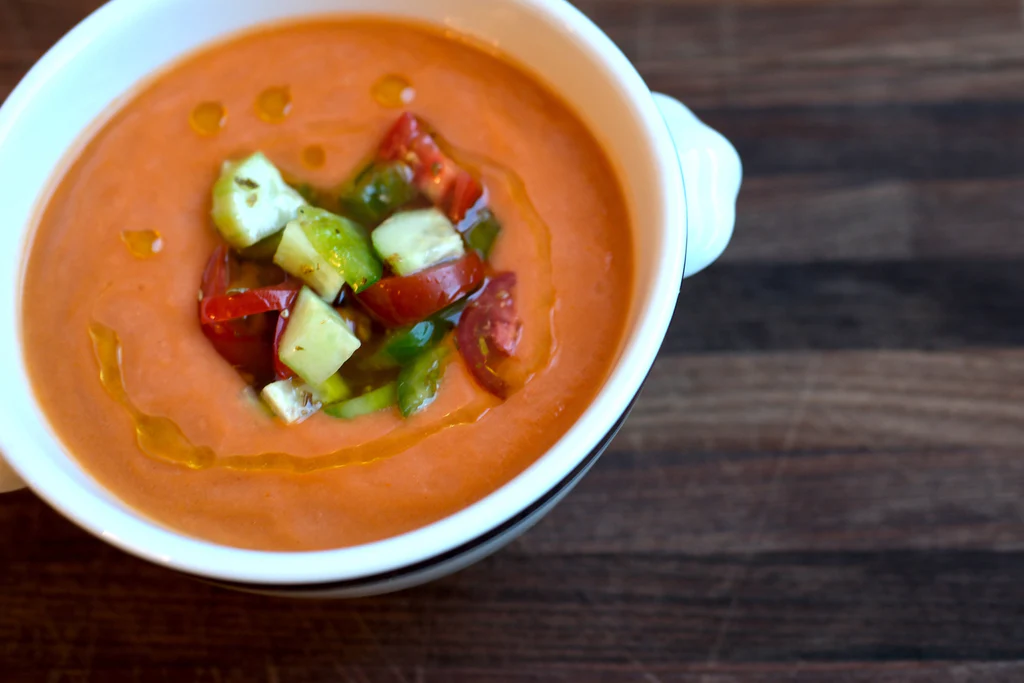
Bowl of chilled gazpacho with diced cucumber, tomatoes, green pepper, and olive oil on wooden board

Why This Hybrid Classic Gazpacho Recipe Works Best

Classic gazpacho is a traditional chilled soup originating from southern Spain and Portugal. While Spanish versions are typically blended for a silky texture, Portuguese versions utilize finely chopped ingredients for more body. This recipe combines both techniques. It uses a base of ripe tomatoes, cucumbers, and green bell peppers blended with American Barrel California Sherry Wine Vinegar, opens in a new tab and bread to create a refreshing, drinkable soup. Adding a textured vegetable topping ensures a visually interesting and satisfying meal.

Gazpacho is a refreshing staple for hot weather. This Classic Gazpacho Recipe draws inspiration from both Spanish and Portuguese traditions. It is a lighter, soup-like cousin of the Italian Panzanella salad.

Blending Traditions for Flavor

The key difference between regional styles is texture. Spanish gazpacho is blended until drinkable. The Portuguese version is chopped and often diluted with ice water. This recipe provides the best of both worlds. We use a silky, strained base with a finely chopped garnish for crunch.

Ingredients That Matter

Expert Steps for the Perfect Gazpacho

  • Salt the Tomatoes First: Toss chopped tomatoes with sea salt and cumin. Let them sit for 15 minutes to release their natural juices. This "tomato water" is vital for soaking the bread.
  • Soak the Bread: Soak stale bread cubes in a mixture of tomato water and sherry vinegar. This ensures the bread integrates perfectly into the soup for a mousse-like consistency.
  • Strain for Silkiness: After saving, run the soup through a strainer. This optional step removes skins and seeds to create a professional, refined texture.
  • Chill Thoroughly: Refrigerate the gazpacho for at least two hours. Serving it ice-cold allows the flavors of the onion, garlic, and peppers to meld beautifully.

FAQs About Classic Gazpacho

Why is bread used in a gazpacho recipe?

Bread acts as a thickener and emulsifier. It creates the signature creamy texture and prevents the water from the vegetables from separating.

Can I make gazpacho without a high-powered blender?

Yes. You can use a standard blender or food processor. If the texture is too coarse, simply strain the mixture through a fine-mesh sieve for a smoother finish.

What are the best tomatoes for gazpacho?

Large, ripe beefsteak or Roma tomatoes are best. If your tomatoes lack sweetness, add a few cherry tomatoes to the mix to improve the flavor profile.

Chilled Gazpacho Soup

American Vinegar Works

Servings

4–6 People

Prep Time

25 minutes

Cook Time

2 hours

Calories

327

Cuisine

Spanish & Portuguese

Category

Soup / Starter

Gazpacho is a refreshing, traditional chilled soup common across southern Spain and Portugal. This recipe offers a "best of both worlds" approach: a silky, blended base characteristic of Spanish gazpacho, combined with a finely chopped, textured topping inspired by the Portuguese version. The key to a spectacular result is using the highest quality ripe tomatoes and ensuring the soup is served ice-cold.

Chilled Gazpacho Soup

Ingredients

  • 2lbs of ripe tomatoes, cored and roughly chopped (more for optional topping)

  • 1 teaspoon sea salt

  • ½ teaspoon of cumin

  • 2 Persian cucumbers (or half an English) peeled, cut into chunks (more for optional topping)

  • 1 garlic clove

  • 1 small yellow onion (or about a ¼ of large) – (more for optional topping)

  • 1 medium green bell pepper, cored and roughly chopped (more for optional topping)

  • 1 slice of stale bread roughly chopped ( about 4 inches of a baguette for instance). 

  • 2 tablespoons of American Barrel California Sherry Vinegar (more for optional topping)

  • ½ cup AVW California Olive Oil (more for optional topping)

  • Optional: oregano for optional topping

Directions

  1. Gather and wash ingredients

  2. Prepare tomatoes, put them in a bowl with salt and cumin.  Stir well and let sit for about 10 to 15 minutes.  You are trying to get the tomatoes to toss out their water (which you want for a later step) as they salt

  3. Prep/chop the other vegetables and bread

  4. Drain the tomato ‘water’ that the tomatoes have tossed off into a small bowl. Add the California Sherry Vinegar to the tomato water

  5. Read in full before proceeding:  your goal is to soak the stale bread cubes in a bowl with the tomato water/vinegar.  If you think you don’t have enough tomato water or just don’t have time for the tomatoes to toss out the water here is your plan B.  Simply take the bread cubes in your hand and run them under the tap to soak with water—now squeeze out that water with your hands, toss the bread in the bowl and now add the tomato water and vinegar for a second soaking. 

  6. Add all the ingredients (other than olive oil) to a high-powered blender mixing ingredients in layers for easier blending

  7. Blend at high power for a few minutes but be careful not to heat the mixture with the blender action

  8. Add the olive oil and continue blending

  9. Now strain the gazpacho.  You may need a spoon to stir in the strainer.  This step is sort of optional BUT it really does produce a much nicer texture and eating experience

  10. Refrigerate the strained gazpacho for at least an hour, ideally two.  Here is why: you want to serve gazpacho cold (and your tomatoes are going to be ambient). It is a supposed to be a refreshing starter. And you want to give time for the flavors to come together.

  11. Optional:  Make topping to spoon on before serving.  Adds some texture and makes it more visually interesting.  All you do is finely chop a little bit of onion, green pepper, tomato, cucumber and mix it all with some oregano, salt, olive oil, and splash of sherry vinegar.

  12. Plate: Taste you refrigerated gazpacho. Adjust salt and vinegar as/if needed. If you want it more liquidy add a small amount of ice water. Serve it in a bowl with some of the topping and a drizzle of olive oil on top. Or simply in a chilled glass as a smaller portion to drink (without topping)

  13. Note on selecting tomatoes:  This dish depends on access to ripe and tasty tomatoes.  When I have doubts about how sweet tomatoes are going to be I put in some cherry tomatoes which tend to be sweeter and can cover the sins of less flavorful store-bought tomatoes out of season.  The color of the Gazpacho is driven largely by the tomatoes—for impact you may want very red ripe tomatoes (but if that yellow heirloom is tastier, I would just deal with the color difference…)

  14. Note on prepping the tomatoes:  After you take out the ends of the tomatoes you can just hand squeeze them over the sink—the seeds center will just shoot out.  Do this for larger tomatoes, not for the cherry tomatoes (if using) but you want them all cut open so that the salt can penetrate

  15. Note on bread:  You are going for stale bread that is of good quality. If you want the gazpacho to be redder you may just want to use only the whites of the bread—the crust will make it a little darker—I’ve never found this to be worth it on my end and it does not impact taste BUT presentation is everything sometimes so I leave that to you.